



Seven Thoughts: Reflections From Pennsylvania’s 2026 Latino Health Summit
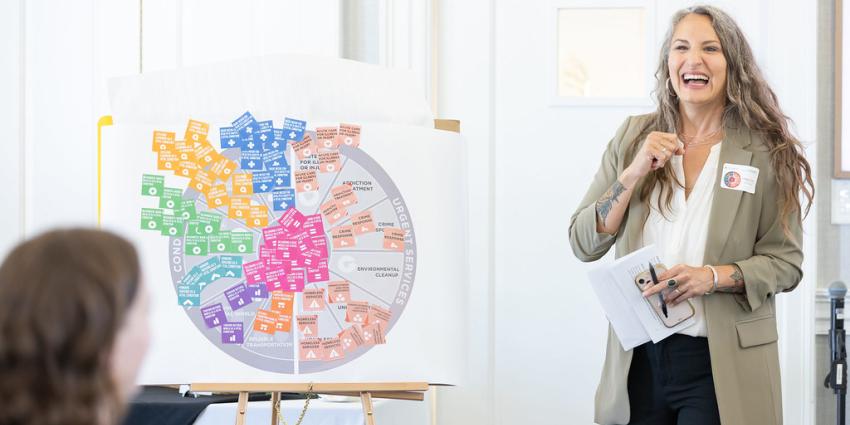
Pennsylvania’s sixth statewide Latino Health Summit, hosted by Latino Connection and sponsored by Jefferson Health Plans, brought together healthcare professionals, community leaders, advocates, and researchers from across the commonwealth. Leonard Parker Pool Institute for Health Executive Director Samantha Shaak, PhD, also led a breakout session on using the Vital Conditions for Health and Well-Being framework to guide neighborhood health improvement.
The summit reinforced a simple idea: Healthier communities are built with people, not for them. Across discussions on healthcare access, nutrition, research, and community development, seven themes stood out.
Access is not meaningful unless people can use it. Access means more than having a service available. Throughout the summit, speakers emphasized that insurance coverage, nearby clinicians, and existing programs do not help if people cannot navigate them. As one panelist noted, access means getting what you need when you need it. Real access requires systems that are understandable, trustworthy, and designed around the realities of people's lives.
- Community engagement is part of the infrastructure for health. Community health workers, navigators, and trusted organizations play a critical role in connecting people with care and resources. Information alone is often not enough. People need trusted relationships that help them understand options, overcome barriers, and act. The summit reinforced that community engagement is not a “soft” addition to healthcare. It is part of the infrastructure that makes healthcare access possible.
- Shared frameworks help us see the whole picture. During Dr. Shaak's presentation, only a handful of participants were familiar with the Vital Conditions framework. Yet many quickly recognized how it connected work they were already doing. Frameworks such as the Vital Conditions and Well-Being Portfolio help distinguish between responding to immediate needs and investing in long-term conditions that support health. Their value is not creating new work but helping partners understand how existing efforts fit into a larger strategy.
- Place-based work is more than working in a place. Nearly every program operates somewhere, but that alone does not make it place-based. Place-based improvement requires understanding how housing, transportation, food access, education, economic opportunity, and social connection interact within a neighborhood. The summit reinforced that lasting change happens when investments strengthen both physical assets and the relationships that connect people to one another and to local institutions.
- Culture is not a barrier to health; it’s a blueprint. One of the summit’s most memorable sessions explored food as a source of identity, connection, and belonging. The discussion highlighted that food is never only fuel. It reflects culture, family, and experiences. Rather than asking people to leave traditions behind, health initiatives are more likely to succeed when they build on cultural strengths. Healthy choices become sustainable when they are familiar, meaningful, and connected to community.
- Representation must be built into research from the beginning. A breakout session on clinical research highlighted the continued underrepresentation of Latino and other populations in studies. Barriers often include transportation, childcare, language, scheduling, and trust. The most successful strategies removed those barriers by bringing research closer to communities and designing participation around people’s lives. The lesson extends beyond research: Equitable systems are built when institutions adapt to people, not the other way around.
- Codesign begins by respecting community knowledge. Across the summit’s many topics, a consistent message emerged: Communities are not waiting for institutions to provide all the answers. Residents possess deep knowledge about their experiences, strengths, and challenges. Residents possess deep knowledge about their experiences, strengths, and challenges. The most effective solutions emerge when professional expertise and experience come together. Codesign means involving residents and community partners from the beginning, not simply asking for feedback after decisions have already been made.
Looking ahead
Thank you to Latino Connection for bringing together such a diverse group of healthcare professionals, researchers, advocates, community leaders, and residents for a day of meaningful conversation and learning. We are also excited that the Pennsylvania Latino Health Summit will come to Allentown in 2027, creating another opportunity to strengthen partnerships and advance health across our region.